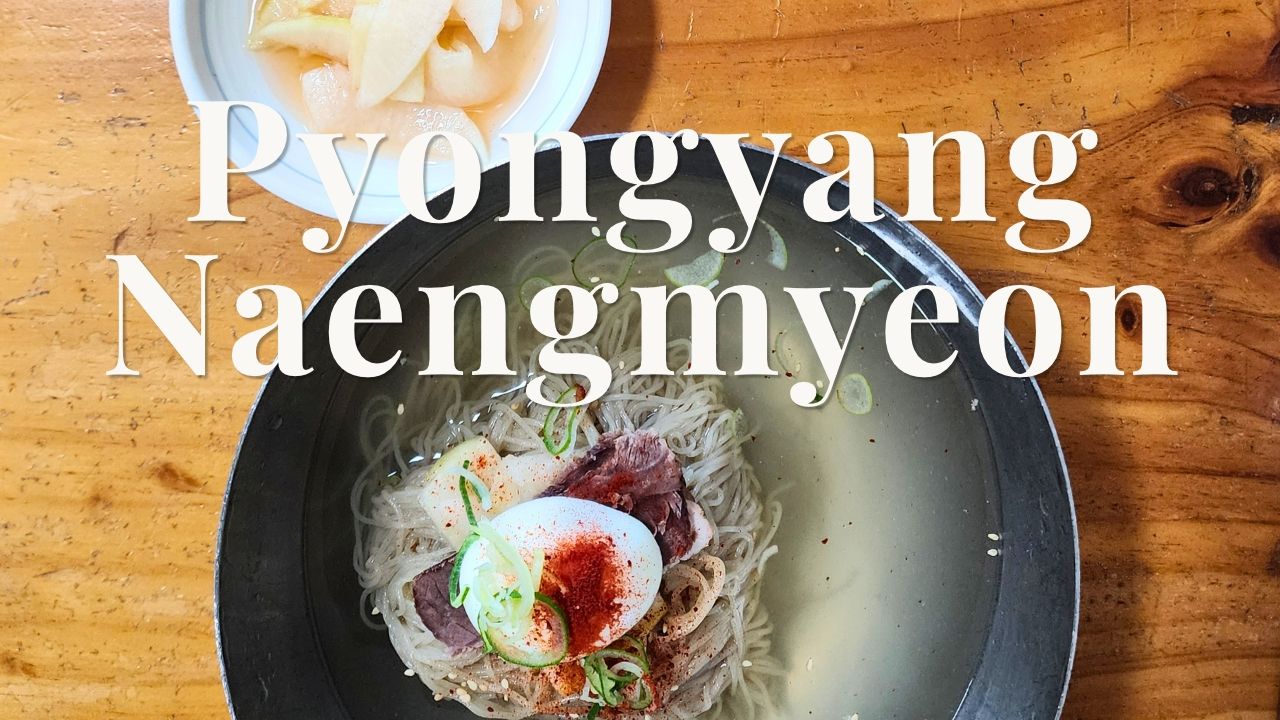
Pyongyang Naengmyeon: The Ultimate Guide to Korea’s Cold Noodle Cult
If you ask Koreans about their ultimate culinary obsession, many will passionately bring up Pyongyang Naengmyeon (평양냉면).
To first-timers, this icy buckwheat noodle soup can be a complete mystery. The broth looks almost as clear as water, and the first sip might taste surprisingly subtle—some even call it “bland.” Yet, it is one of Korea’s most revered food traditions with a massive, almost religious cult following.
Here is the ultimate insider guide to Pyongyang Naengmyeon: from its historic lineages and legendary rivalries to the exact restaurant you should visit based on your food personality.
1. What is Pyongyang Naengmyeon? (Definition & Basics)
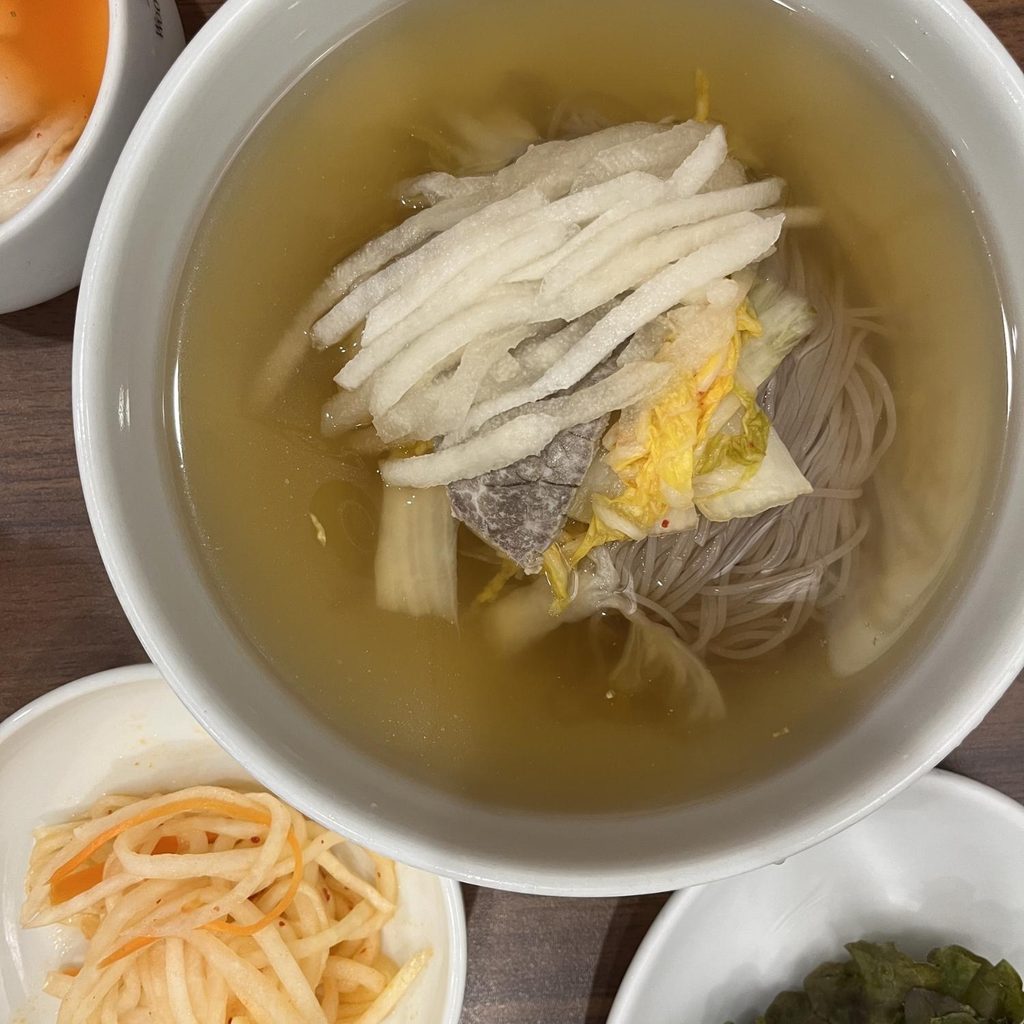
Pyongyang Naengmyeon originated from Pyongyang, the current capital of North Korea. Traditionally enjoyed during the cold winter months near a warm floor heater (Ondol), it was brought to South Korea by refugees during the Korean War and evolved into a national phenomenon.
Key Elements:
- The Broth (육수): A chilled, crystal-clear broth made by simmering beef, pork, and sometimes chicken or pheasant bones for hours. It features a subtle, savory beef aroma without heavy garlic or sugar.
- The Noodles (메밀면): Made predominantly from buckwheat (Memil). Unlike bouncy, rubbery noodles, buckwheat noodles are soft, earthy, and break effortlessly with a light bite.
- The Style: Pure, minimal, and deeply savory without relying on fiery hot sauces or heavy seasonings.
2. The Pyongyang Naengmyeon Dynasty: The Big Three Lineages & History
In the world of Seoul’s Pyongyang Naengmyeon, purists divide the legendary restaurants into two major lineages—The Uijeongbu Faction and The Jangchung-dong Faction—along with the powerhouse Woo Lae Oak Faction.
               [ Pyongyang Naengmyeon Lineage ]
                              │
    ┌─────────────────────────┼─────────────────────────┐
    ▼                         ▼                         ▼
[Uijeongbu Faction]   [Jangchung-dong Faction]    [Woo Lae Oak Faction]
(Pyeongyang Myeonok)   (Pyeongyang Myeonok)      (Deep Beef Broth)
    │                         │                         │
    ├── Pildong Myeonok       └── Mother Shop in        └── Original & Spin-offs
    └── Eulji Myeonok             Jangchung-dong
    (Run by Daughters)        (Plus Gangnam Branches)
The Three Major Flavor Factions
Uijeongbu Faction (의정부파)
- Flavor Profile: Zesty, crisp, and slightly spicy (칼칼하고 쨍한 육수).
- Signature Look: Broth dusted with fine red chili powder (Gochutgaru) and chopped scallions.
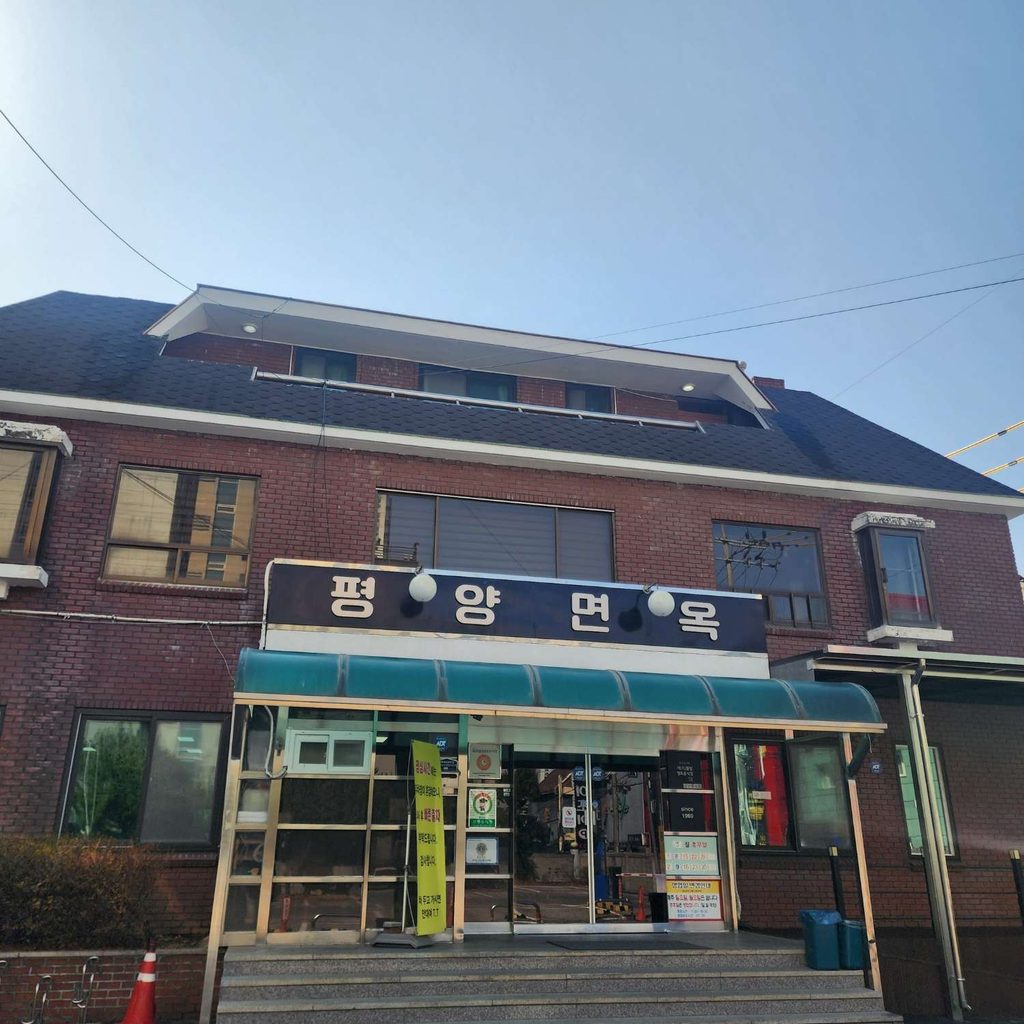
- The Family Story: The founder of Uijeongbu Pyeongyang Myeonok opened the original shop, and her daughters moved into central Seoul to establish legendary spots: Pildong Myeonok (필동면옥) and Eulji Myeonok (을지면옥). This created Seoul’s most famous cold noodle dynasty!
Jangchung-dong Faction (장충동파)
- Flavor Profile: Endless, subtle umami (끝없이 들어가는 슴슴함).
- Signature Look: Crystal-clear broth with minimal garnish, focusing on pure, gentle beef and pork notes.
- The Family Story: The flagship Jangchung-dong Pyeongyang Myeonok (장충동 평양면옥) stands as the sacred origin of this faction, expanding through family lines into Gangnam and Bundang.
Woo Lae Oak Faction (우래옥파)
- Flavor Profile: Rich, deep, beef-forward aroma (초보자들에게 선호도 높은 강력한 육향).
- Signature Look: Slightly darker, intensely savory beef broth. While rooted in early northern tradition, Woo Lae Oak stands out as the friendliest entry point for beginners due to its bold beef flavor.
3. Which Naengmyeon Shop Should You Visit? (A Beginner vs. Master Guide)
Not all Naengmyeon spots are created equal. Use this comprehensive recommendation matrix to find the exact restaurant for your taste buds!
Restaurant Recommendation Matrix
| Category | Recommended Spot | Why Visit? | Flavor / Style |
| Best for Beginners | Woo Lae Oak (우래옥) | Rich beef flavor, easy to enjoy instantly | Deep, savory beef broth |
| Best Modern Michelin Star | Jinmi Pyeongyang Naengmyeon (진미평양냉면) | Michelin Bib Gourmand, Gangnam’s hottest spot | Perfect balance of beef aroma & clear broth |
| Best Budget & Market Vibe | Buwon Myeonok (부원면옥) | Located in Namdaemun Market, famous for Chicken Salad (Dak-muchim) | Sweet-savory, accessible broth & highly affordable |
| Best for Purists/Masters | Pildong Myeonok (필동면옥) | Iconic Uijeongbu-style chili powder dusting | Crisp, subtle, refreshing |
| Best Traditional Mother-Shop | Jangchung-dong Pyeongyang Myeonok (장충동 평양면옥) | The original birthplace of the Jangchung-dong faction | Ultra-clean, subtle, classic North Korean style |
| Best Tangy & Refreshing | Nampo Myeonok (남포면옥) | Historic spot known for blending tangy radish brine (Dongchimi) | Refreshing, slightly tangy, savory beef broth |
| Best for Heritage Vibe | Eulji Myeonok (을지면옥) | Heritage spot with deep culinary history | Light, sharp chili-scallion broth |
📍 Detailed Spot Guide
4. How to Eat Pyongyang Naengmyeon Like a Local Pro
There is a precise ritual to enjoying this dish. Follow these steps for the ultimate flavor transition:
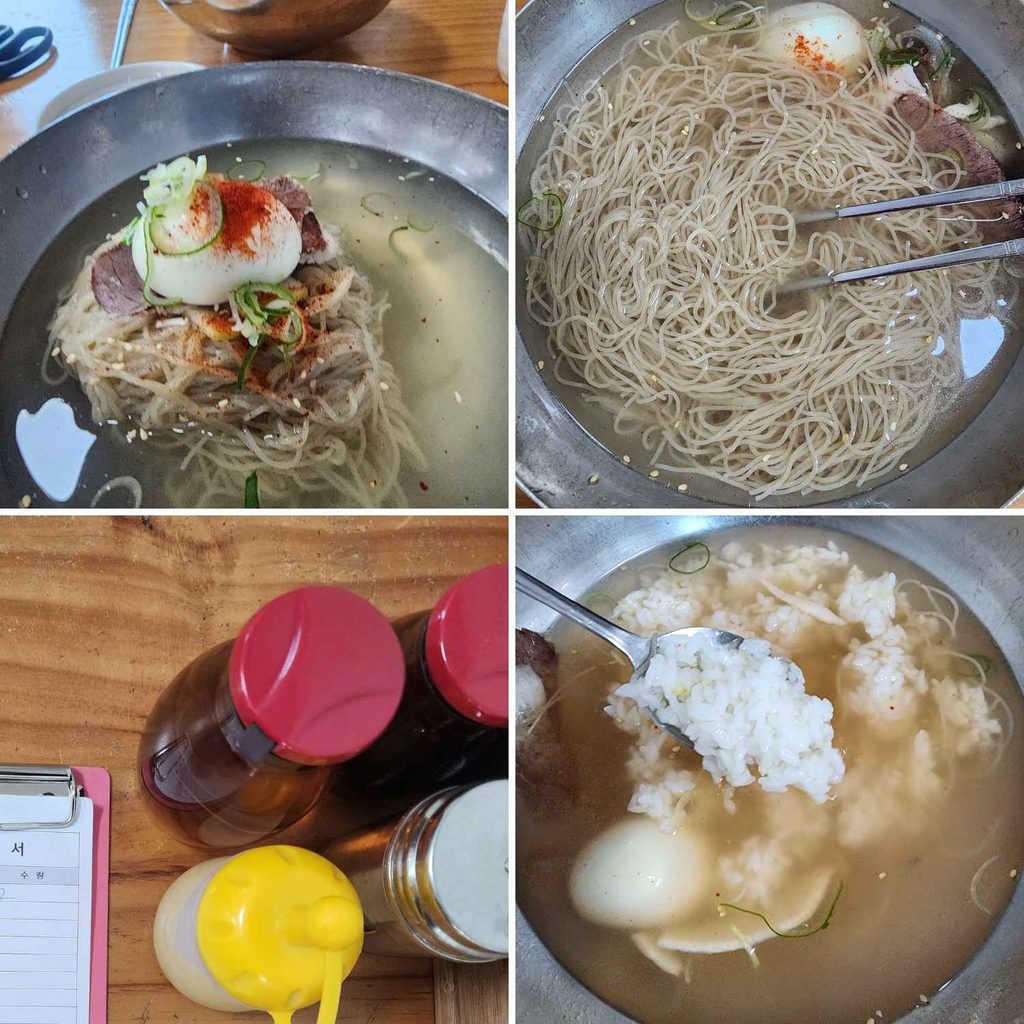
Step 1: Deep Sip ──► Step 2: Untangle Noodle ──► Step 3: Add Vinegar/Mustard ──► Step 4: Add Rice (Optional)
(Pure Broth)         (Buckwheat Aroma)          (On Noodles Only!)             (The Master Secret)
- Step 1: Drink the Broth First (국물 마시기)Before mixing anything, lift the bowl with both hands and take a deep sip directly from the rim. Feel the pure, chilled beef aroma.
- Step 2: Untangle the Noodles & Inhale (면 풀기)Gently untangle the buckwheat noodles into the soup. As the buckwheat mixes with the cold broth, it releases a delicate, nutty fragrance. Take another sip of broth to notice how the flavor has softened!
- Step 3: Apply Vinegar & Mustard to Noodles ONLY (식초/겨자)
- Golden Rule: Never squirt vinegar or mustard directly into the soup! It destroys the delicate broth. Instead, drop a little vinegar or mustard directly onto a chopstick portion of noodles before eating.
- Step 4: The Secret Master Move—Adding Rice (밥 말아먹기)Some hardcore Naengmyeon aficionados order a bowl of warm rice at the end. After finishing most noodles, dropping a scoop of rice into the remaining cold beef broth creates an unforgettable savory finish.
5. Best Food Pairings: What to Order Alongside Naengmyeon
In Korea, Naengmyeon is rarely eaten alone. Pairing cold noodles with hot or savory side dishes creates a perfect contrast in temperature and texture.
Dak-muchim (닭무침 / Tangy Cold Chicken Salad)
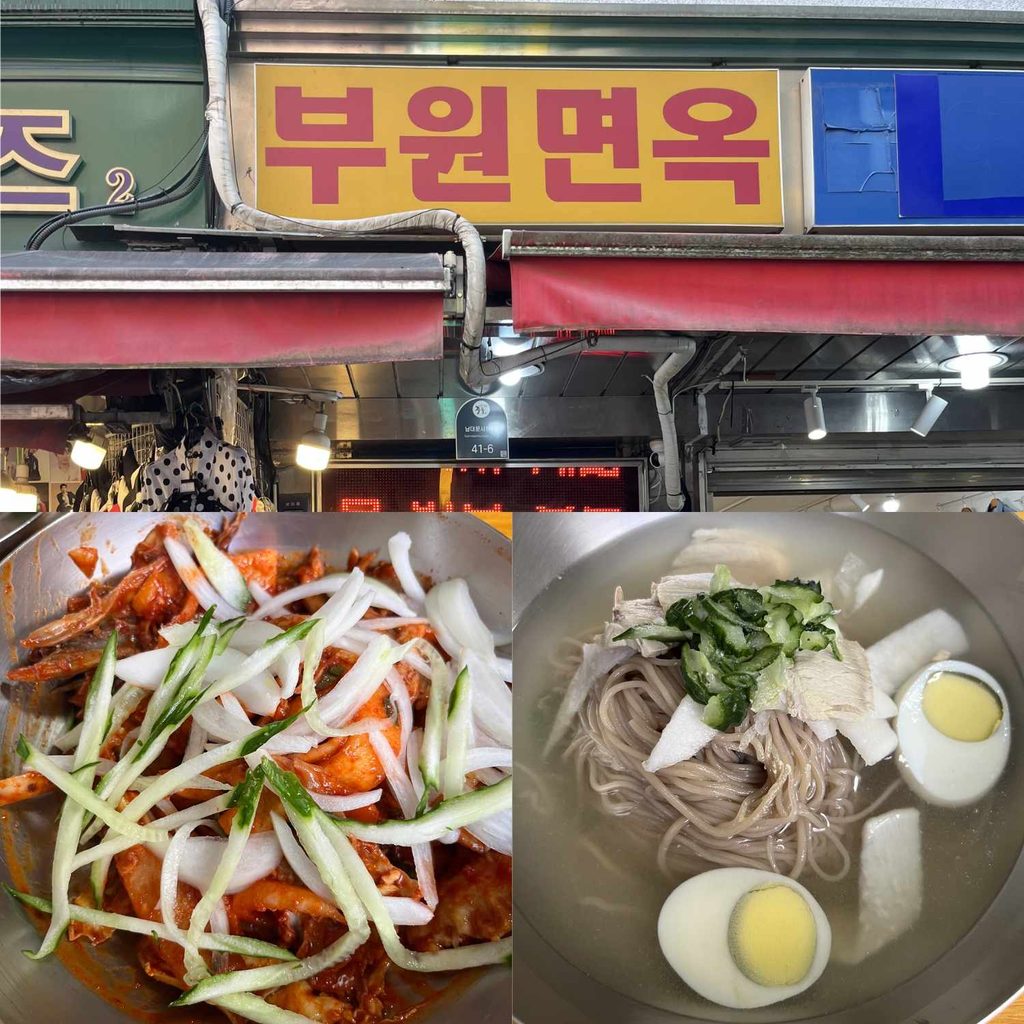
- Why Pair It: Cold, shredded tender chicken tossed with onions, cucumbers, and a sweet-and-sour dressing. It gives an invigorating kick alongside cold noodles.
- Where to Try: Buwon Myeonok (부원면옥) in Namdaemun Market is world-famous for this signature side dish!
Pyeong-yuk (편육 / Boiled Pork Slices) & Suyuk (수육 / Boiled Beef Slices)
- Why Pair It: Thinly sliced chilled or warm pork/beef dipped in salted shrimp (Saeujeot) or spicy sauce adds rich protein to complement the light noodles.
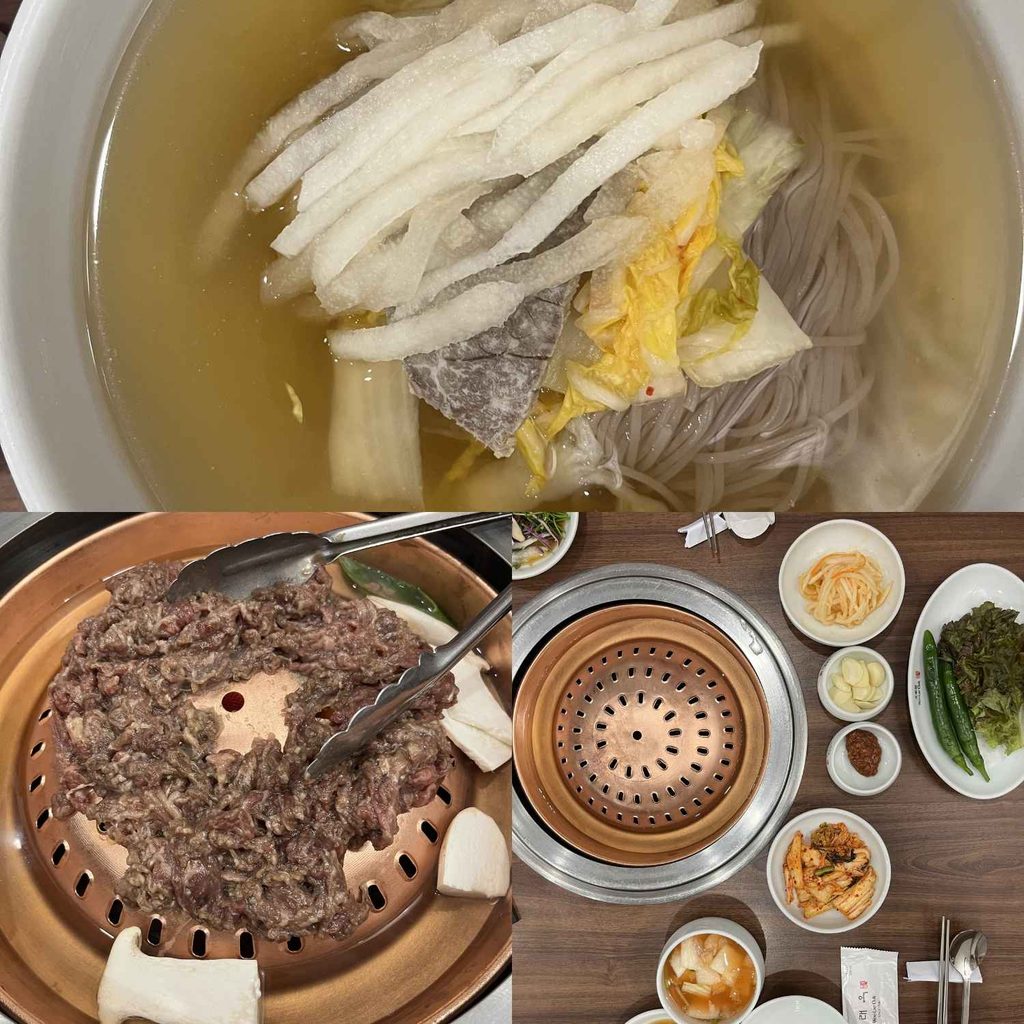
- Where to Try: Pildong Myeonok, Eulji Myeonok, and Jinmi Pyeongyang Naengmyeon serve buttery, melt-in-your-mouth Pyeong-yuk.
Bulgogi (불고기) & Eobok-jaengban (어복쟁반 / Hot Beef Platter)
- Why Pair It: Sweet, savory warm beef or a sharing platter of boiled beef cuts and mushrooms (Eobok-jaengban) offers rich warmth between icy cold noodle bites.
- Where to Try: Woo Lae Oak (for Bulgogi) and Jinmi Pyeongyang Naengmyeon (for Eobok-jaengban).
💡 Author’s Personal Take: How I Became a True Naengmyeon Enthusiast
“When I first started my cold noodle journey, Woo Lae Oak and Buwon Myeonok were my absolute favorite because of its rich, hearty beef flavor. But as I visited more spots across Seoul and naturally evolved into a true Pyongyang Naengmyeon mania, I realized that the Uijeongbu Faction is the ultimate original classic.
In Korea, locals jokingly say that your first bowl of pure Pyongyang Naengmyeon tastes a bit like ‘dishwater’ because of its pale color and surprisingly subtle flavor. But there comes an undeniable moment when that exact subtle, savory broth mysteriously starts calling your name out of nowhere—and you find yourself craving it again and again.
When that happens to you, congratulations: you have officially crossed the threshold into the wild world of Pyongyang Naengmyeon fandom, just like me!
P.S. While most people instantly think of Pyongyang Naengmyeon during Korean summers, true local noodle masters often venture into Kongguksu (Chilled Soy Milk Noodle Soup) as well. To be totally honest with you, though… I still haven’t mastered Kongguksu yet!